

Foundation Repair in Tyler, Texas
Foundation Repair and Leveling for Tyler Homes
Seeing stair-step cracks in the brick, a sloping floor or doors that suddenly stick? Tell us what is happening and request a free foundation estimate.
- Slab and pier and beam homes
- Written estimate before work
- Cause-first recommendations
Get your free estimate
Tell us what's going on. We call you back fast.
Foundation Repair in Tyler, TX
Foundation Problems in Tyler and East Texas
Foundations in East Texas deal with a soil problem most people never think about until a crack shows up. Much of the ground around Tyler is red sandy clay with layers of expansive clay underneath. Those clay layers shrink during long, hot, dry summers and swell again after heavy rain, and a house sitting on top of them moves a little with every cycle.
Over time that movement shows up as stair-step cracks in brick, gaps around window frames, doors that drag or will not latch, and floors that feel slightly downhill. Foundation Repair Tyler helps homeowners figure out whether that movement is minor and cosmetic or a sign of real settlement. We look at the whole house, explain what we find in plain language and put the scope and price in writing before any work begins.
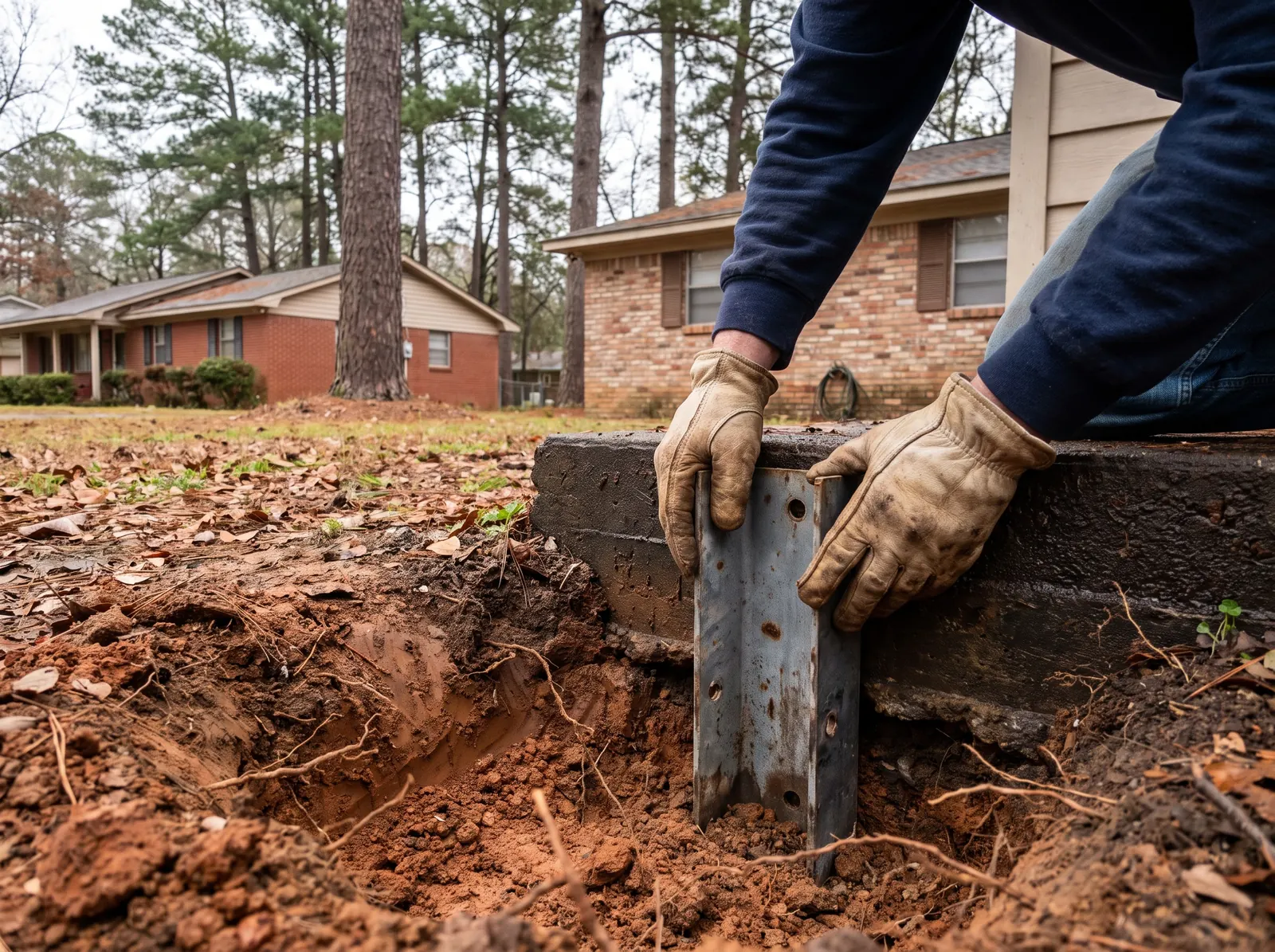
Trees add to the picture. The tall pines and oaks that make Tyler neighborhoods so pleasant pull a lot of moisture out of the soil near a house during dry spells, which can make one corner of a slab drop faster than the rest. We take tree roots, gutters and drainage into account so a repair addresses why the foundation moved, not just the fact that it did.
What we do
Our Foundation Repair Services
Foundation repair is our focus. That covers slab foundation repair, pier and beam leveling, crawl space repair, structural repairs to beams and walls, and the drainage and waterproofing work that keeps soil moisture steady around the house. Each job starts with finding the cause, because the right fix depends on how your home is built and what the soil around it is doing.
Foundation Repair
Foundation repair in Tyler for slab and pier-and-beam homes: pressed piles, steel piers, re-leveling and drainage fixes for East Texas clay.
Learn moreFoundation Drainage and Waterproofing
Gutters, downspout extensions, grading, French drains and root barriers that keep the soil under a Tyler slab at an even moisture level.
Learn moreCrawl Space Repair
Moisture control, vapor barriers, ventilation, wood rot and sagging joists in the crawl space under pier-and-beam homes in Tyler.
Learn moreStructural Repair
Sagging floors, cracked brick veneer, failed beams and damaged framing in Tyler homes, repaired with an engineer involved when the job calls for one.
Learn moreSlab Foundation Repair
Pressed concrete piles, steel piers, slab leveling and plumbing leak checks for the concrete slab homes found across Tyler.
Learn morePier and Beam Repair
Re-shimming, replacing failed piers and blocks, new beams and re-leveling for the older pier-and-beam homes in Tyler.
Learn moreWhy homeowners call us
Why Choose Foundation Repair Tyler?
We look for the cause before the cure
Foundation movement usually has a reason, such as poor drainage, a thirsty tree or a leak under the slab. We check for it so the repair is not undone by the same problem a few seasons later.
Repairs sized to the problem
If a few piers, new shims or better drainage will do the job, that is what we recommend. We do not push whole-house work when a smaller repair makes sense.
Slab and pier and beam know-how
East Texas has both foundation types in large numbers. We match the method to the one under your house rather than forcing one approach onto every home.
A written scope before work starts
You get the proposed work, materials and price in writing first. If something unexpected turns up once digging starts, we stop and talk to you before going further.
Built around East Texas soil and weather
Expansive clay, dry summers, heavy spring and fall rain and big trees all shape how we plan a repair and what we suggest for drainage afterward.
Fast call-backs and clear answers
Call and describe what you are seeing. We get back to you quickly, ask the right questions and tell you honestly what the next step should be.
How it works
Our Foundation Repair Process
- 1
Call and tell us what you see
Describe the cracks, doors or floors that worry you. Photos help us plan the inspection.
- 2
Inspection and floor elevations
We measure how level the floors are, look at the outside of the foundation and check drainage, trees and any crawl space.
- 3
Written plan and estimate
You get our findings, a pier or support layout where needed, the price and anything that needs an engineer's input.
- 4
Repair and lift
We install the agreed piers, piles or supports, lift gradually and watch for strain on walls, plumbing and finishes.
- 5
Final measurements
We re-measure the floors, backfill and clean up, and walk you through the results and what to watch going forward.
Our approach
A Practical, Cause-First Approach to Foundation Repair
Not every crack means the house needs piers. Hairline shrinkage cracks in a slab are common and often harmless, while a widening crack that runs through brick and drywall on the same wall deserves a closer look. Our job is to tell the difference, measure the floor with a level, and recommend the smallest repair that actually solves the problem.
Tyler has a mix of housing that calls for different methods. Most newer homes sit on concrete slabs, while older houses in the Azalea District and other established neighborhoods are often pier and beam, with a crawl space underneath. A slab may need piers driven to stable soil, while a pier and beam home may only need new shims, a few added supports or repairs to a sagging beam. When a situation calls for an engineering evaluation, we can work with your residential civil or structural engineer, or recommend that one gets involved before work starts.
Service area
Where We Serve You
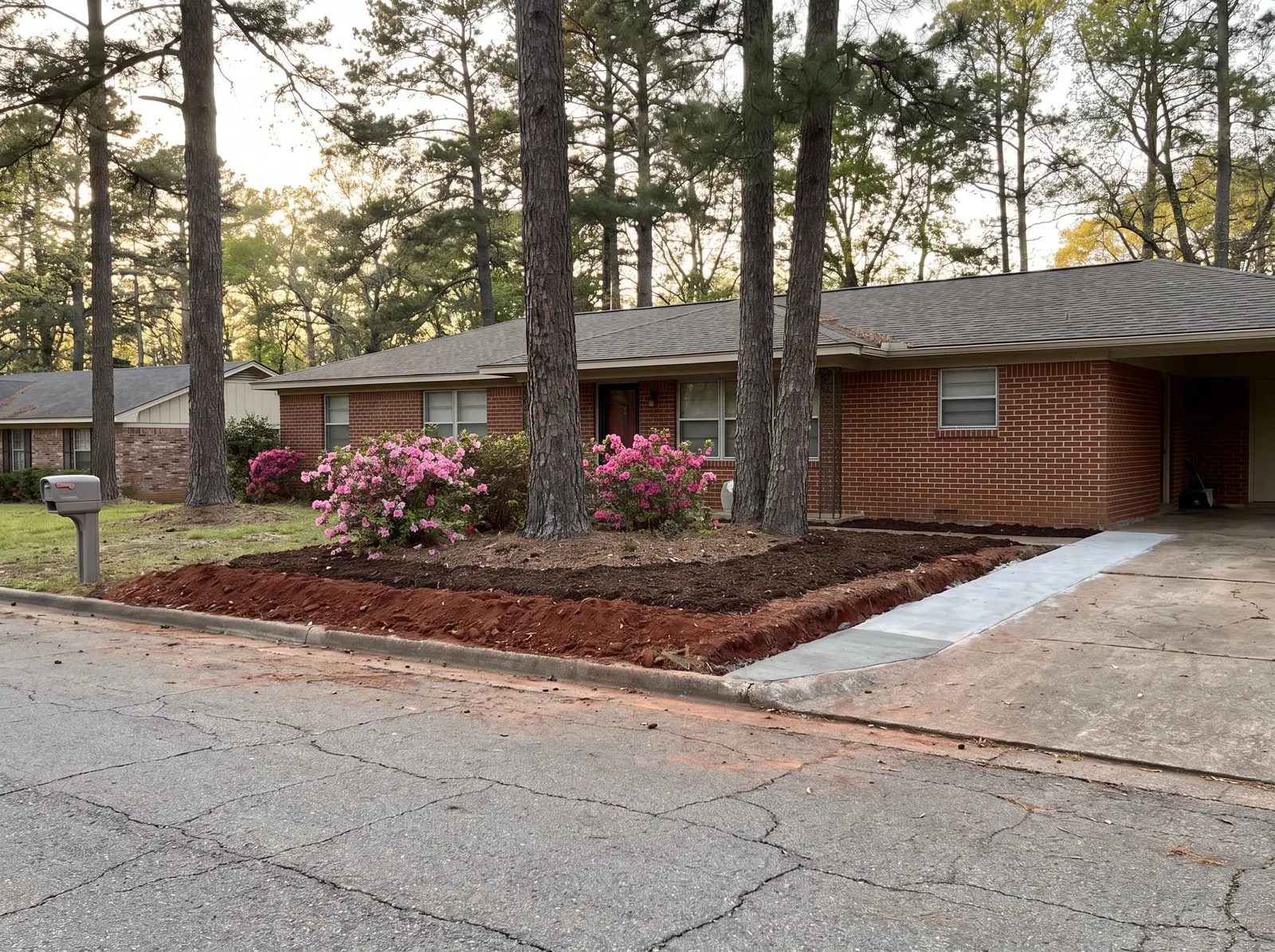
We work across Tyler and Smith County, from neighborhoods off Loop 323 to homes near Lake Tyler, and in nearby East Texas communities including Whitehouse, Lindale, Bullard, Chandler, Jacksonville and Kilgore.
If your home is in or near one of these towns, call and tell us where it is and what you are noticing. If it is outside the area we cover, we will tell you right away.
Questions
What People Ask Us
Are small cracks in my slab or brick something to worry about?
Thin, straight hairline cracks in a slab are often just concrete shrinkage and are common in Tyler homes. Cracks that widen over time, run in a stair-step pattern through brick, or show up alongside sticking doors and sloping floors are more likely to signal movement. If you are unsure, photograph the crack with a coin or ruler for scale and call us.
Why do foundation problems seem worse after a dry summer?
The clay layers in East Texas soil shrink as they dry out, and the ground can pull away from the edge of a slab. When that happens unevenly, part of the house drops a little and cracks appear. Heavy rain later in the year can swell the soil again, which is why some cracks open and close with the seasons.
Can trees near my house cause foundation damage?
They can contribute. Large pines and oaks draw a lot of moisture from the soil during dry periods, and that can make the soil under one side of the house shrink more than the rest. Removing a tree is not always the answer, so we look at the whole situation before suggesting anything.
Do I need an engineer before foundation repair?
Not for every job, but it is a good idea for significant settlement, a home you are buying or selling, or when a lender or buyer asks for documentation. We can work with your residential civil or structural engineer, or recommend that one evaluates the house first. Ask any contractor you talk to about permits and engineering letters.
Get Your Free Foundation Repair Estimate
Tell us what is happening with your foundation in Tyler. Call us to request a free estimate.